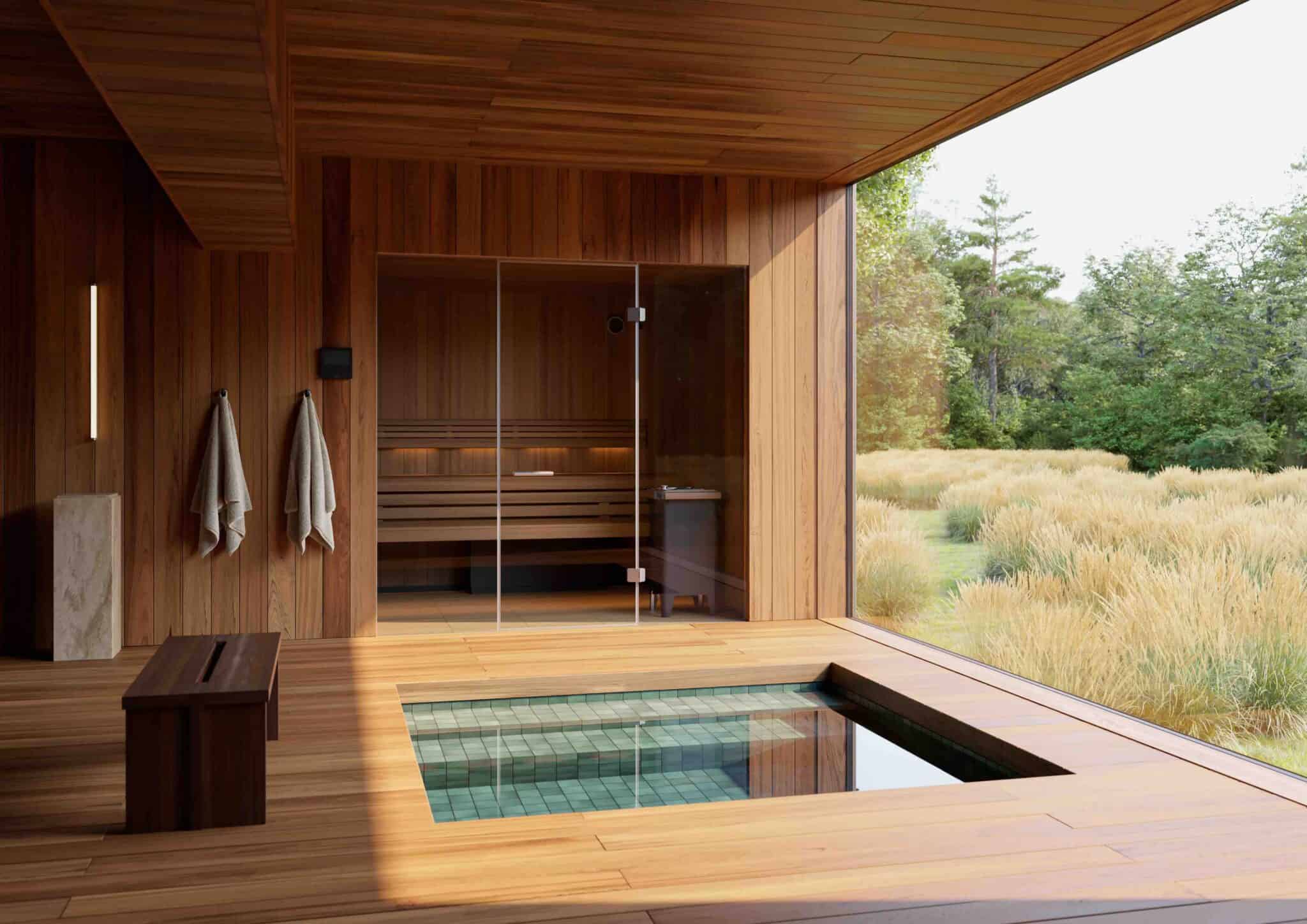
There was a time when wellness in a luxury home meant a sauna off the pool house and a yoga mat in the guest room. That time has passed. Across the East End, the most coveted new construction and renovation projects are now being designed from the inside out, with health, recovery, and sensory experience woven into the architecture itself rather than added as an afterthought.
The shift is profound and, by most accounts, permanent. Client conversations at the highest level of the market have fundamentally changed. Where projects once began with aesthetic direction, a mood board, a material palette, a set of reference images, they now begin with something closer to a wellness brief. How the home should feel at six in the morning. How it should support sleep, recovery, and sustained focus. How light, air, and sound should shift throughout the day.
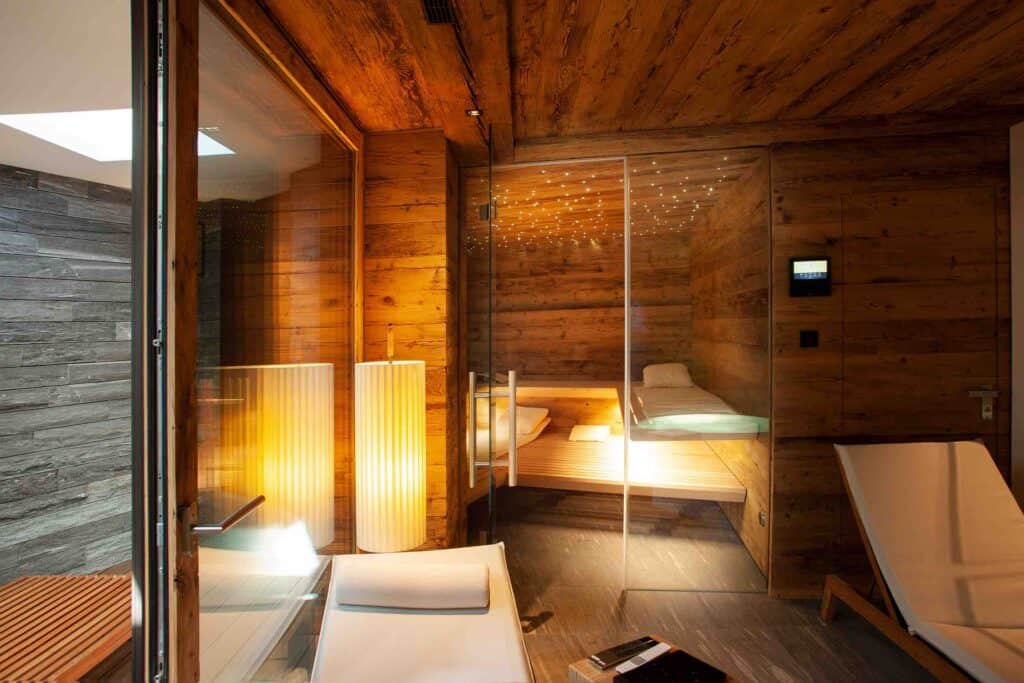
Courtney Lukitsch, founder of the Well Design Summit, has been tracking this transformation closely. “Homes are no longer just places we occupy,” she says. “Instead, they are actively built and curated to shape our identity, health, and emotional state. Through nature, light, materiality, and intentional sensory design, architecture and the environment become tools for self-awareness, wellness, and future-focused living. Wellness is reshaping the world’s largest asset class, encompassing a globally projected market valuation of $6.5 trillion.”
On the East End, that figure is not abstract. It is visible in the materials being specified, the systems being installed, and the conversations happening between clients and designers before a single plan is drawn.
That thinking is reshaping the floor plan. Circadian lighting systems, calibrated to mirror the natural arc of sunlight, have become standard in high-end East End builds. Hospital-grade air purification is increasingly written into the design phase rather than added after the fact. Radiant heat flooring, once reserved for the primary bathroom, now runs beneath the full footprint of many new homes.
The relationship between interior and exterior has been reconsidered with equal intention. Retractable glass walls, seamless indoor-outdoor thresholds, and dedicated spaces for breathwork and quiet reflection have become recurring features at the upper end of the market. The primary bathroom has evolved into something closer to a private spa, designed not for efficiency but for restoration. Materiality has entered the conversation with similar urgency. Natural plasters, low-VOC finishes, and organic textiles have moved from preference to expectation, with many clients arriving at the design table already fluent in the health implications of conventional building materials.
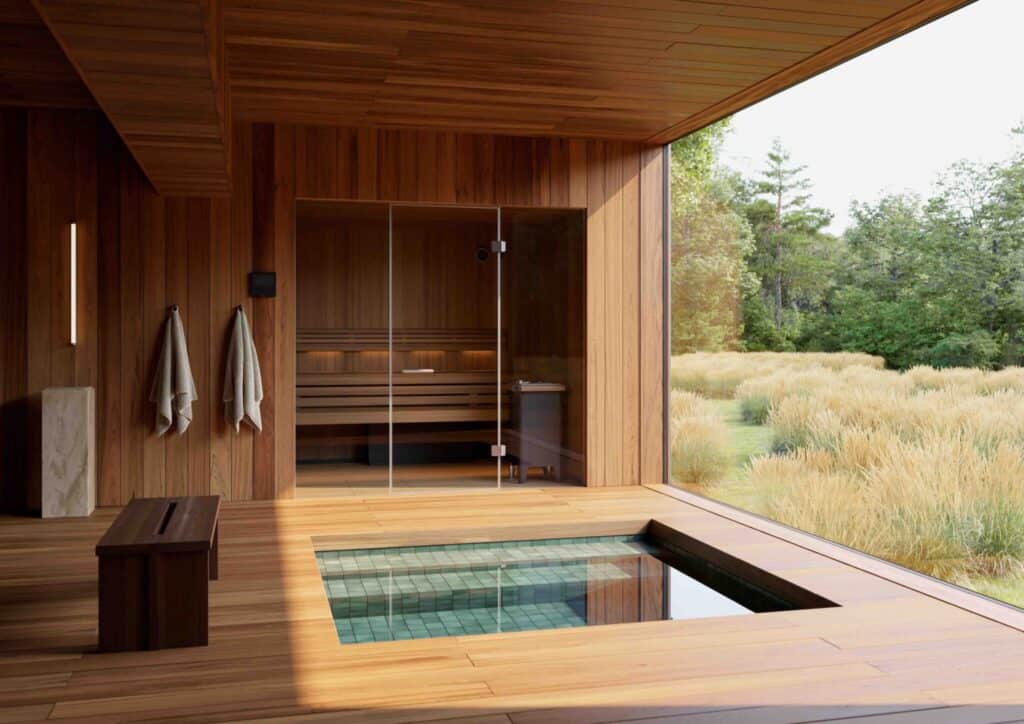
Recovery infrastructure has become one of the most consistently requested categories in new construction. Cold plunge pools, infrared saunas, and red light therapy suites now appear in project specifications with the same regularity as wine rooms and home theaters once did. Austin Laudenslager, Founder and CEO of Peak Saunas, identifies the deeper shift beneath the trend. “The most interesting shift in wellness isn’t a new gadget — it’s ownership,” he says. “Routines people used to rent by the session are becoming permanent fixtures at home, and the sauna is the anchor.” The influence of high-end wellness hospitality, from the Aman to the Six Senses, is unmistakable in how residential clients now articulate what they want from their homes.
Sleep, too, has become an architectural priority. Dedicated sleep suites with precision blackout systems, acoustic insulation, and individually calibrated temperature controls are increasingly part of the brief at the highest end of the market. The primary bedroom now commands the same planning attention the kitchen once did.
On the East End, where the home has always been an expression of how one chooses to live, the definition of living well has simply become more exacting.