For decades, the East End aesthetic came with a familiar visual vocabulary: weathered woods, a myriad shades of blue, and enough nautical elements to remind visitors they were, indeed, near the water.
But increasingly, the most memorable homes east of the canal look nothing like that traditional East End interior. A quieter curated aesthetic is emerging among a certain set of homeowners. These interiors feel less “beach house” and more like a life well-traveled. Antique equestrian prints alongside Moroccan textiles. A vintage French farmhouse table in a room with ocean views.
Instead of decorating around a prescribed coastal style, homeowners are creating interiors that feel layered, personal, and deeply reflective of their lives. Antique French farm tables sit beside contemporary art. Moroccan rugs mingle with vintage Italian lighting. Family heirlooms share space with finds from local estate sales and treasures collected on far-flung travels.
The result is a quieter, more sophisticated approach to design—one that prioritizes authenticity over theme and tells a story no showroom can replicate. “It’s no longer about creating a beach house,” says Kate Davis, founder of Davis Designs. “It’s about creating a beautiful home that happens to be near the beach.”
That distinction may seem subtle, but it’s reshaping interiors throughout the East End.
Beyond the Coastal Formula
The classic East End aesthetic isn’t disappearing. In fact, many designers argue that its core principles—light-filled rooms, natural materials, and a strong connection to the outdoors—remain timeless.
What is changing is how homeowners are interpreting those foundations.
“I think people are craving authenticity,” says designer Lori Evans, co-owner of Evans Construction & Design. “They want pieces collected over time, artwork they have a connection to, family heirlooms, travel finds, and furnishings that mean something to them.”
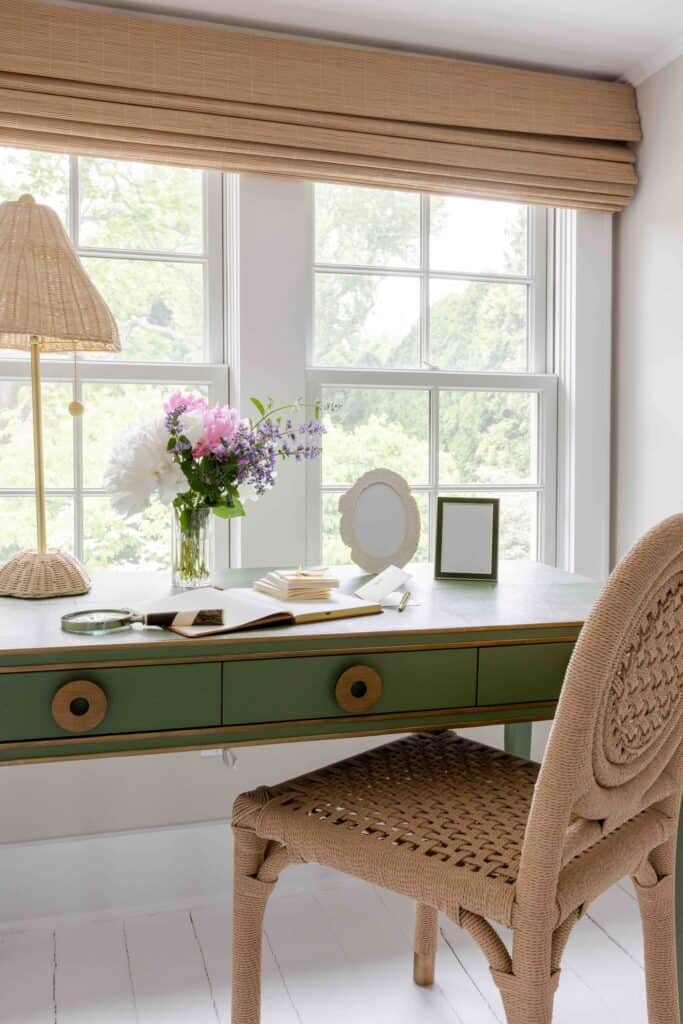
Rather than purchasing entire rooms from a single retailer or adhering to a rigid design category, clients are increasingly asking for homes that feel collected, layered, and personal.
Evans says some of the most common requests she hears today are for spaces that feel “timeless,” “comfortable,” and “not too perfect.” That desire for authenticity extends beyond aesthetics. Homeowners are also rethinking how they use their spaces. Evans notes that game tables and gathering spaces are replacing elaborate bars and dedicated entertainment rooms as families seek homes that encourage connection and everyday living.
“People still want beautiful homes,” she says. “But they want those homes to support real life.”
A House That Tells Your Story
For designers, creating a collected home begins by understanding the people who live there. “Don’t decorate for the address,” advises Tyson Ness, founder of Studio Ness. “Decorate for your life.”
Ness recently completed a Montauk beach house that serves as a perfect example of the shift. Rather than pursuing a conventional Hamptons look, the homeowner wanted a residence that reflected her global travels and personal experiences.
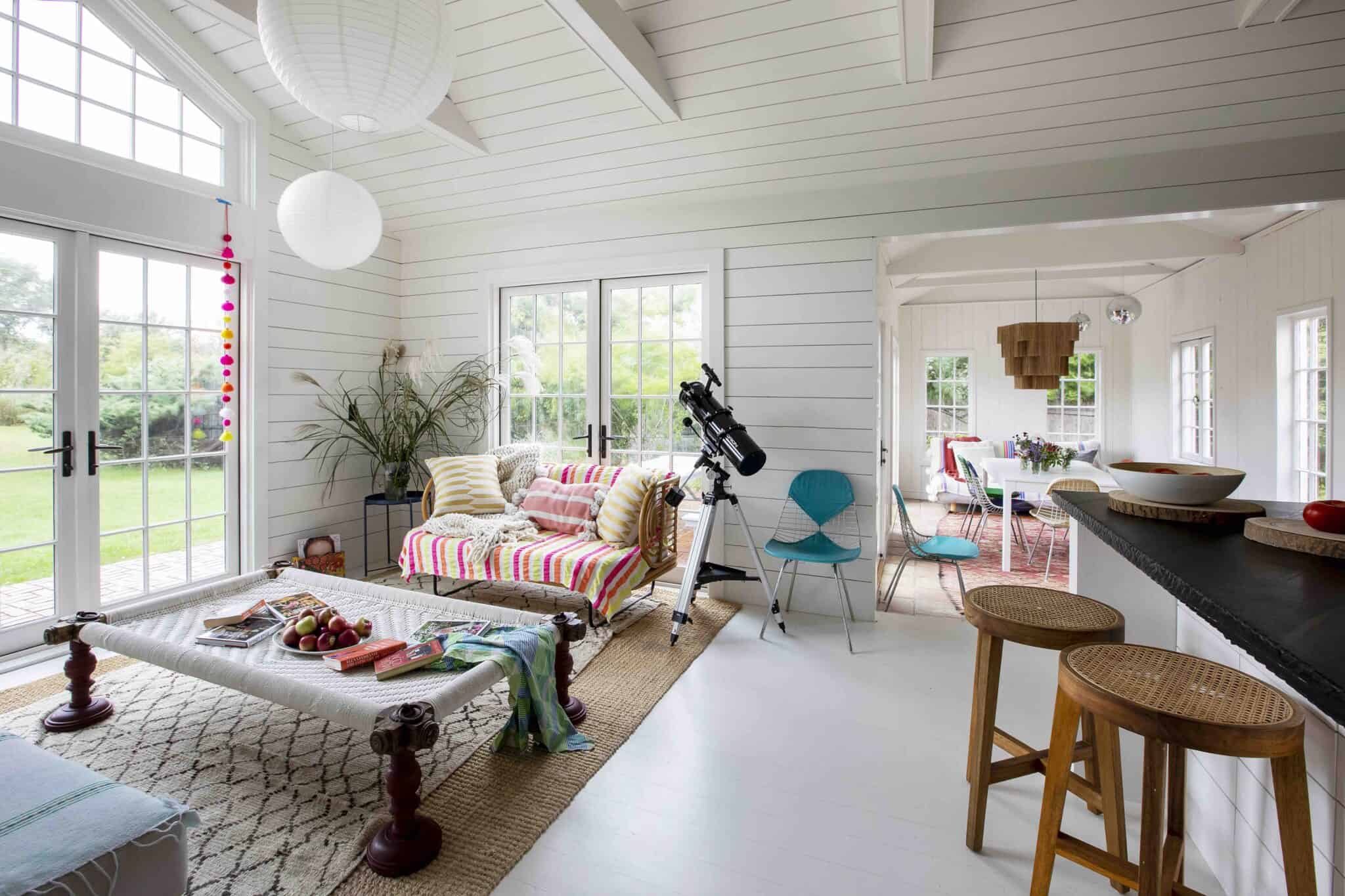
The resulting interior features vintage lighting sourced through Italian and German auctions, vintage Eames chairs discovered in Chicago, Moroccan rugs layered throughout the home, and custom-designed built-ins created specifically for the space.
The kitchen, often the centerpiece of an East End home, was designed less as a traditional showpiece and more as an integrated part of daily life. Even its unusual chiseled-edge slate countertops were selected to connect the interior to the surrounding landscape.
Perhaps most telling is what Ness calls the home’s “dairy bath”—a room featuring open shelving designed to encourage ongoing collecting. Guests and family members can display shells, stones, and other treasures gathered from the beach and surrounding property, allowing the home to continue evolving over time.
That sense of evolution is central to the collected-home philosophy. Rather than feeling finished, these homes remain open to new discoveries and experiences. “The best projects happen when a designer can translate personal memories, experiences, and aspirations into physical spaces,” Ness says.
The Beauty of Layering
A collected home doesn’t happen by accident.
While these interiors may appear effortlessly assembled, designers emphasize that successful layering requires a thoughtful foundation.
“For me, it starts with a strong foundation [where] the architecture, color palette, and larger furnishings work together first,” Evans explains. “Once that’s in place, that’s when I start layering in the pieces that give a home personality.”
Those personality pieces can take many forms: inherited furniture, artwork purchased on a memorable trip, flea-market discoveries, vintage lighting, or meaningful objects accumulated over decades.
Davis sees this layering as one of the defining characteristics of today’s most sophisticated interiors. “Antique furniture, unexpected artwork, heirlooms, global textiles, and pieces gathered over time create homes that feel authentic rather than themed,” she says.
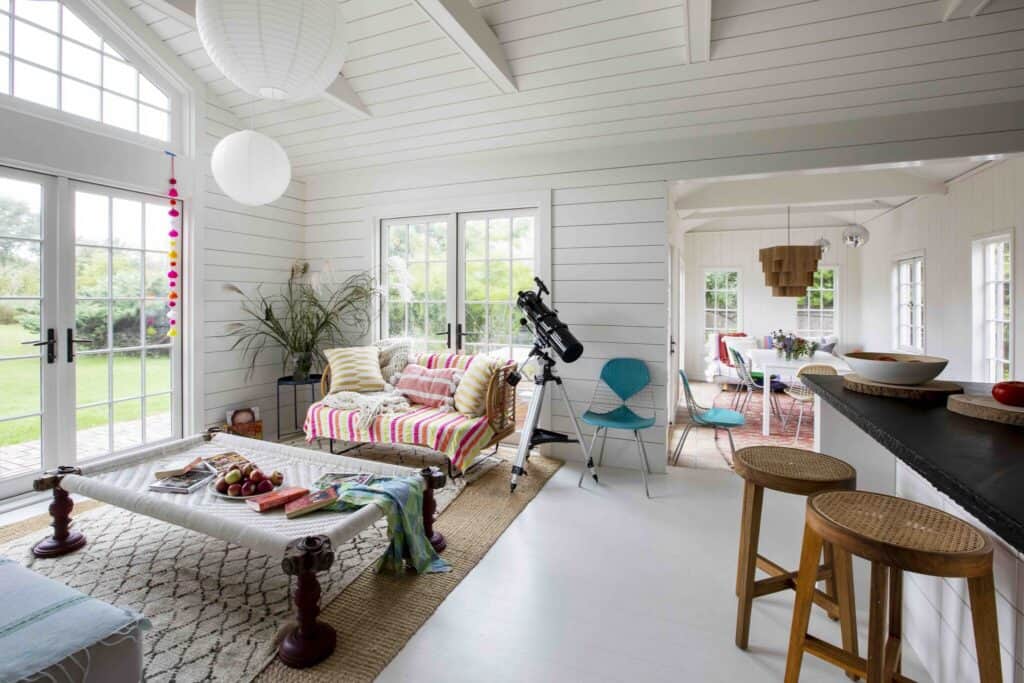
The key is balance. A vintage French farmhouse table can coexist with contemporary art. English antiques can pair beautifully with modern lighting. Coastal architecture can serve as the backdrop for global influences. The goal isn’t strict adherence to any single design style. It’s creating a home that reflects a life well lived.
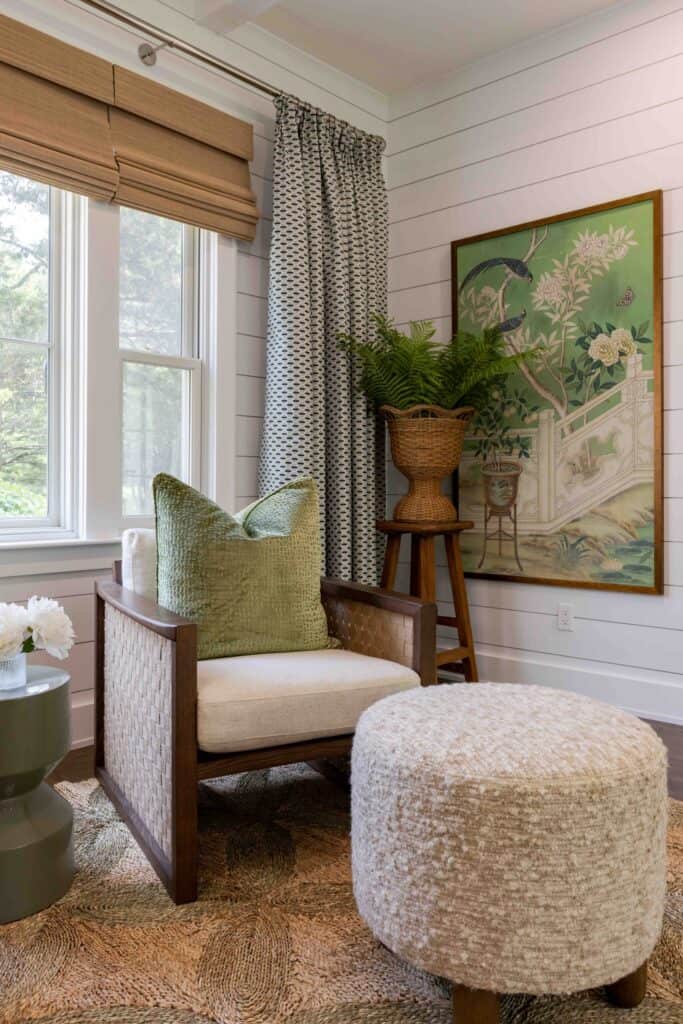
Paige Loperfido, founder of Decor & More Design Studio, encourages homeowners to embrace contrast as part of that process. “Mix materials and finishes to add depth and contrast,” she says. “Pair seagrass with velvet and wood, or rattan with mahogany. These contrasts help a space feel dynamic and timeless rather than overly styled.”
She also points out that some of the best collecting opportunities exist close to home. The East End’s thriving antiques scene, local art community, and natural landscape provide endless inspiration for creating spaces rich with character.
Collecting as a Way of Living
The collected-home movement isn’t solely about design. In many ways, it’s a reflection of how people want to live.
June Haynes, co-founder of East Hampton’s newly opened lifestyle boutique JJUIN, sees growing interest in handcrafted objects that carry stories, histories, and a sense of place.
The company’s collection draws on partnerships with artisans across Africa, Asia, and Europe, reflecting a broader consumer desire for objects that feel personal rather than mass-produced.
The appeal isn’t simply aesthetic. Homeowners increasingly want their surroundings to remind them of experiences, relationships, and discoveries.
Evans offers a favorite example from her own home: a giant letter “V” salvaged from a Stevie Nicks concert sign at the Hollywood Bowl after a trip she took with her daughters following her mother’s death.
It’s hardly a traditional design object. Yet it remains one of her most treasured possessions because of the story attached to it. “Those are the things that make a house special,” she says. “Anyone can buy the same sofa, the same coffee table, or the same lamp. What people can’t replicate are the pieces that tell your story.”
How to Start Building a Collected Home
The designers interviewed for this story offered remarkably consistent counsel: begin with what you love. Buy pieces because they move you, not because they align with a trend. The most successful homes, ultimately, are the ones that reveal something true about the people who live there. In a region long associated with a singular visual style, that may be the most significant shift of all — the future of East End interiors isn’t less luxurious. It’s simply more personal.