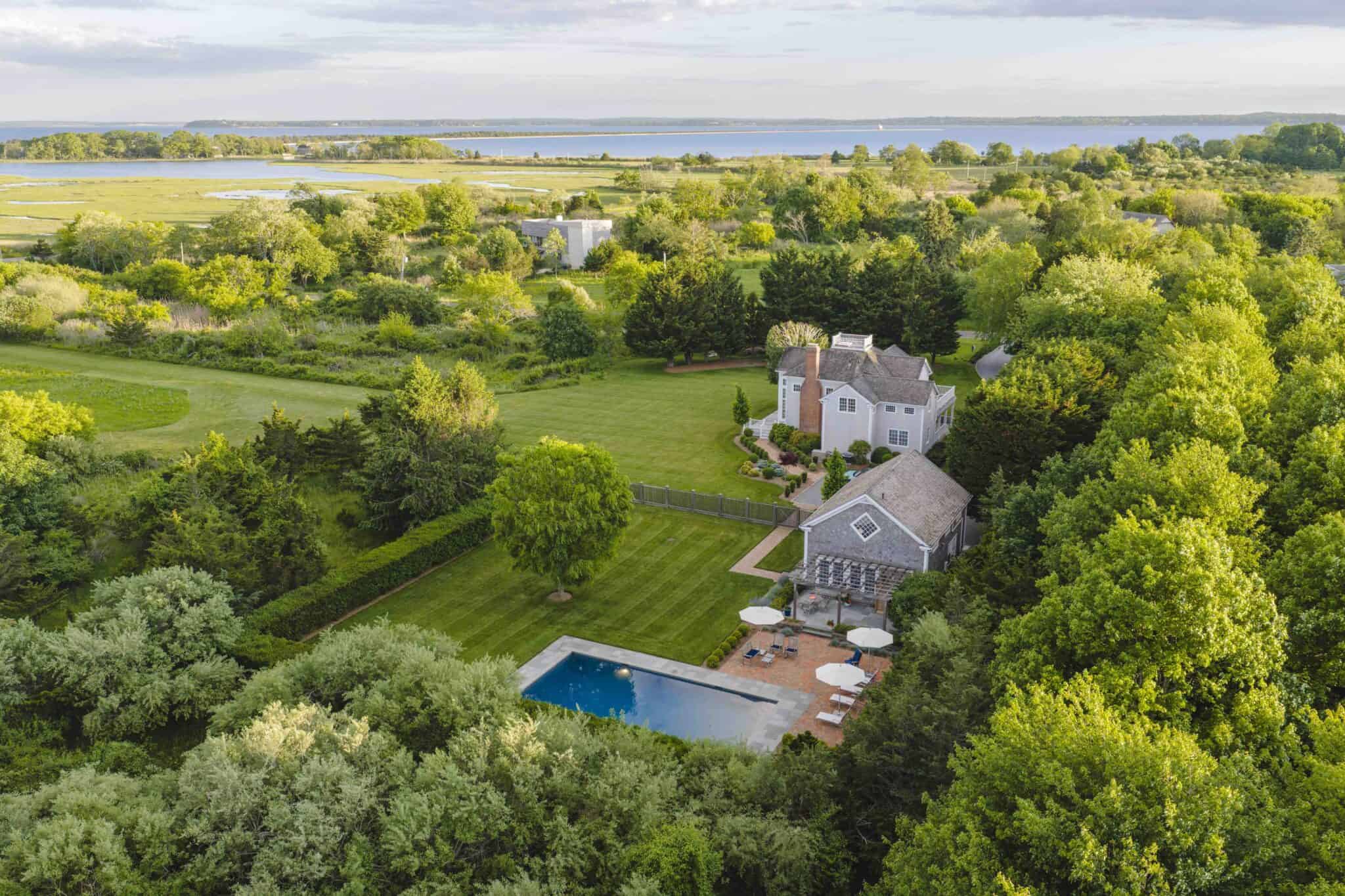
The North Fork real estate market approaches the end of summer defined by a quality of demand that sets it apart.
Buyers are arriving more informed, more intentional, and more certain of what they are looking for — drawn not by urgency, but by genuine conviction about the way they want to live.
To take the measure of the North Fork market, we sat down with four of its most accomplished brokers — Kristy Naddell of Douglas Elliman, Bridget and Eric Elkin of Compass, and Tom Scalia of Century 21 Albertson. Together, they offer a candid and nuanced account of the forces shaping the market: who is buying, what they are looking for, where values have settled, and what buyers and sellers alike must understand to move with confidence in one of the East End’s most compelling and growing markets.
How has buyer demand shifted on the North Fork over the past year, and are you seeing any meaningful changes in who is buying and why?
Kristy Naddell: Buyer demand remains strong but decidedly more intentional — today’s buyers compare carefully, weigh value, and consider whether a home truly fits their lives. The market continues to draw second-home buyers from New York City, Brooklyn, Westchester, and Nassau County, alongside a growing number planting roots with an eye toward making the North Fork a primary or retirement home. Notably, buyers are crossing over from the Hamptons in meaningful numbers — not seeking a less expensive alternative, but specifically choosing the North Fork’s authenticity, open space, and quieter sense of community.
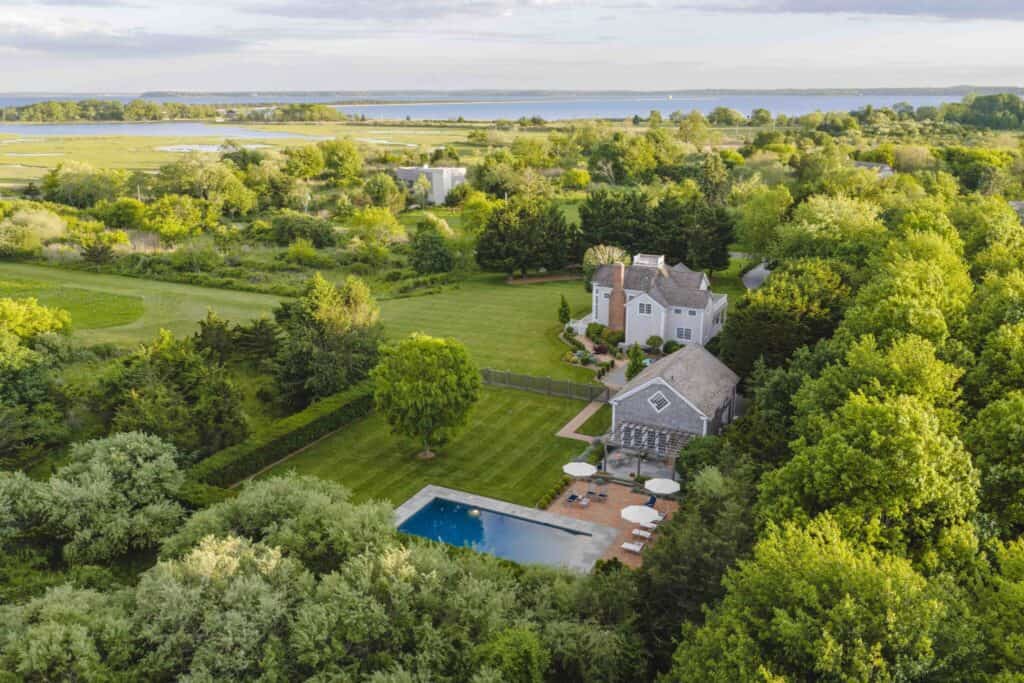
Represented by Bridget and Eric Elkin of Compass
Elkin Team: The buyer pool has broadened considerably. Second-home purchasers are arriving from further afield — Westchester, Connecticut, and beyond — while existing North Fork owners trade up or downsize, first-time buyers find their footing, and Hamptons shoppers and renters looking for an alternate lifestyle. The median sale price eased 10.4% to $979,000 in Q2, quietly widening the entry point, even as sales above $1 million reached a record 53.1%. A wider band of buyers is transacting up and down the price ladder, not a market narrowing around any one profile.
Tom Scalia: Buyer demand has increased, we’re seeing more transactions year over year – second home buyers at a higher price point.
How does the current supply picture compare to recent seasons, and how is it
shaping negotiations?
Kristy Naddell: Inventory remains the North Fork’s defining challenge — turnkey homes, waterfront properties, new construction, and homes near beaches or village centers are still genuinely scarce. Yet limited supply does not mean every property sells at any price. Today’s buyers are sophisticated and willing to wait when value isn’t clear. A well-priced, well-presented home can still generate immediate interest and competition; an aggressively priced one risks sitting, reducing, and ultimately netting less. Negotiations are property-specific. Sellers retain leverage when they own something difficult to replicate — but the market is rewarding quality and accuracy, not scarcity alone.
Elkin Team: We’re seeing a correction in Q3, concentrated in the middle of the market. Inventory has risen two quarters running — up 5.3% to 139 listings in Q2 — and prices across multiple segments have retreated from their highs. Bidding wars fell sharply, to 5.8% of sales from 23.3% a year ago, and aspirational pricing now carries a real cost. That extra five percent is often precisely what keeps the right buyer from walking through the door — and a buyer who never sees the house cannot make an offer on it. Price accurately from the start and the market rewards you with a faster, cleaner sale.
Tom Scalia: Year over year North Fork supply is down, homes priced correctly are moving quickly.
The North Fork has long been seen as a more accessible alternative to the Hamptons, but prices have risen considerably. Do you feel the market has found a new equilibrium, and where do you see the strongest momentum by price point and property type?
Kristy Naddell: The North Fork has reached a new level of value, though pricing continues to mature. There remains a meaningful gap between properties that simply carry a North Fork address and those that deliver the full lifestyle. The market is no longer a bargain, but it remains a compelling value relative to the Hamptons. The broadest buyer pool sits between $800,000 and $1.5 million; turnkey homes, pools, and water proximity drive demand from $1.5 to $3 million. Above that, buyers will pay for exceptional waterfront or architectural significance — but they are highly discerning and unforgiving of overpricing.
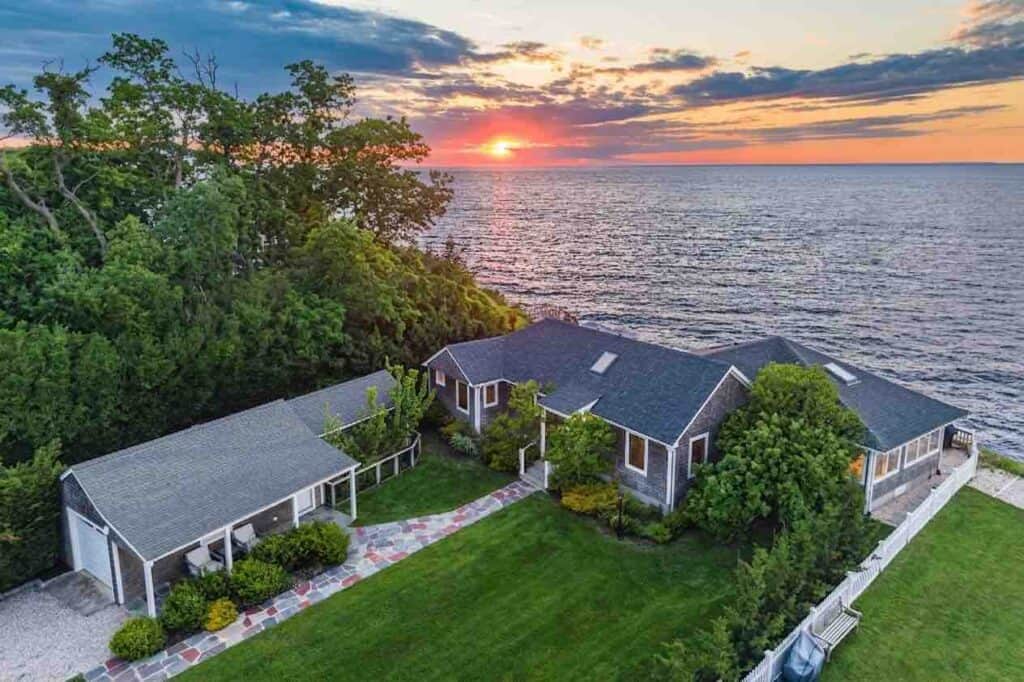
Represented by Kristy Naddell of Douglas Elliman
Elkin Team: The North Fork was never a discounted Hamptons — it has always been a distinct lifestyle choice. Luxury waterfront continues to perform, and buyers increasingly want cost certainty in a market where renovation budgets have grown unpredictable. Cutchogue posted the North Fork’s highest median sale price in Q1 at $1.5 million; New Suffolk continues to outperform on charm and scarcity alone. Both forks, Shelter Island included, are strong markets in their own right, and each is becoming more desirable for how easily it connects to the others. Greenport puts you a short ferry ride from Shelter Island and the South Fork; Jamesport connects to Westhampton via Route 105. Buyers are moving in both directions.
Tom Scalia: We’ve seen a substantial increase in the percentage of non-waterfront transactions over two million dollars and more and more waterfronts pushing up to the $5m-$10m range
Are there newer factors drawing buyers that you were not seeing five years ago?
Kristy Naddell: Today’s buyer thinks beyond beaches and wineries — though both remain essential. Wellness now drives significant decision-making: pools, saunas, cold-plunge areas, gardens, and outdoor spaces for disconnecting are increasingly expected rather than aspirational. Buyers also want homes that accommodate extended family, with guest cottages, first-floor primary suites, and compound-like flexibility. Remote work has made second homes more functional year-round, raising expectations around home offices and reliable systems. Meanwhile, the North Fork’s dining, boutique hospitality, and cultural offerings have quietly matured — giving buyers a sophisticated lifestyle without sacrificing the authenticity and slower pace that drew them here in the first place.
Elkin Team: The North Fork draws people seeking authentic year-round community over manufactured exclusivity — and that distinction shapes how buyers behave. Those choosing a place for the long term shop more deliberately, which partly explains why bidding wars have settled considerably from their peak. There is also a quieter force at work: proof by proximity. Buyers are watching people they know, across every generation, actually make the move — and that visibility does real work. The decision stops feeling like a risk and starts feeling like something they do not want to miss.
Tom Scalia: Wineries, farm stands, farm to table restaurants, golf and the waterfront lifestyle have always been a draw on the North Fork. We are seeing more and more buyers looking for privacy and quiet with easier access as well as more extended family purchases.
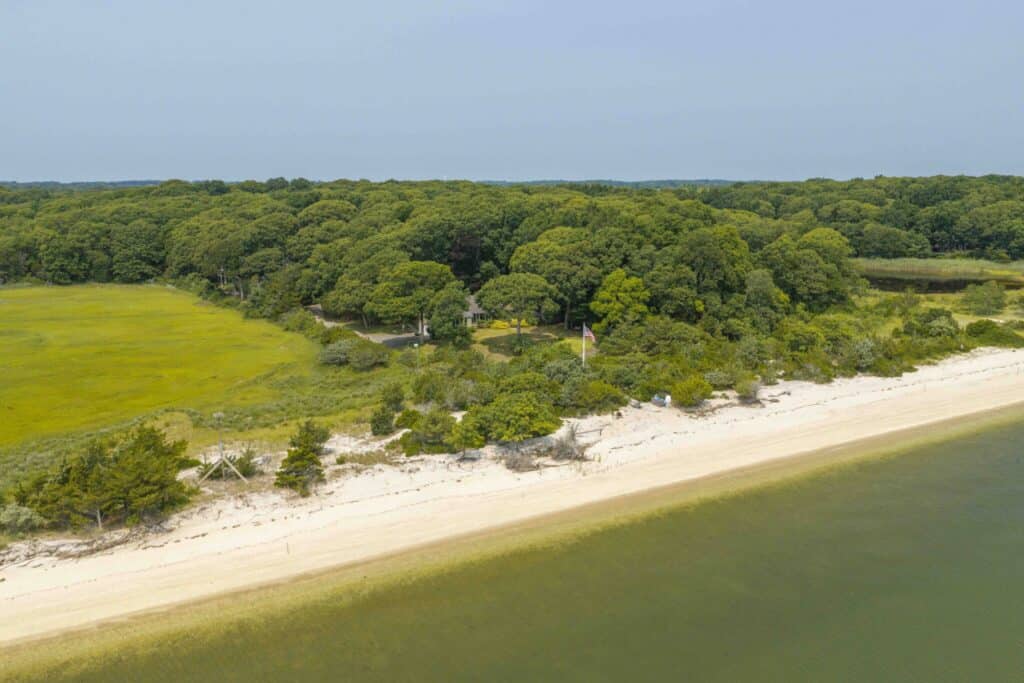
Represented by Tom Scalia of Century 21 Albertson
What is your outlook for fall 2026, and what would you tell buyers and sellers deciding whether to act?
Kristy Naddell: Fall 2026 should be active but selective. Autumn buyers tend to be serious — they have spent the summer studying hamlets and refining their criteria, and motivated sellers remaining after Labor Day can create genuine opportunity on both sides. For buyers, attempting to time rates or the broader economy is a mistake. The North Fork has finite supply, and the most desirable properties cannot be reproduced. Move decisively when the right home appears. For sellers, pricing and presentation are everything — the market is not forgiving aspirational pricing. Ultimately, the best outcomes go to buyers and sellers with strong representation, clear expectations, and a realistic understanding of value.
Elkin Team: The fundamentals heading into fall remain largely unchanged. Inventory stays tight, and the gap between well-priced listings and overpriced ones will only widen — the former commands strong attention, the latter faces growing skepticism. The new construction premium should hold as long as renovation costs remain unpredictable. For sellers, the advice is consistent: price accurately at launch. With bidding wars at 5.8% of sales versus 23.3% a year ago, there is no safety net for a listing that opens too high. For buyers, fall and winter reward patience and clarity — a house reveals its true character in the cold in a way a June afternoon never will. The people who have done well out here moved when they found the right property, not when the moment felt comfortable.
Tom Scalia: Overall, I’d characterize the fall market on the North Fork as a healthy market with constrained inventory and moderate appreciation potential—not fiercely competitive like we’ve seen in recent years but not a bargain market either. Buyers, I would tell you not to wait for a large correction that may never come. Buy when you find the right property and the numbers work for your finances. Sellers, I’d say this is still a favorable market—but it’s no longer one where every listing sells quickly at any price. Accurate pricing and presentation matter much more than they did a few years ago.