Rooted by the Shore: Designing Gardens That Flourish by the Sea
Being near the water—whether it’s the Atlantic along the South Fork or the quiet waters of the Sound on the North Fork—shapes nearly every aspect of life on the East End. Nowhere is that more apparent than in our gardens. The closer you are to the shoreline, the more the water influences your landscape. Salt, sand, sun, and wind become both challenge and opportunity—forces to be understood rather than resisted.
Wind is the most persistent element in a coastal garden. Sometimes it arrives as a soft breeze, other times as a punishing gust, but it’s always present. On properties exposed to the southwest or northeast, it can quite literally sculpt the landscape—bending trees, flagging shrubs, and damaging unprotected blooms. Salt and fine sand ride the wind, etching foliage and weakening stems. The smartest design response is one of structure: windbreaks in the form of dense, layered plantings. Privet, viburnum, and holly aren’t just privacy hedges—they’re living walls that protect the garden’s interior, creating microclimates where more sensitive species can thrive.

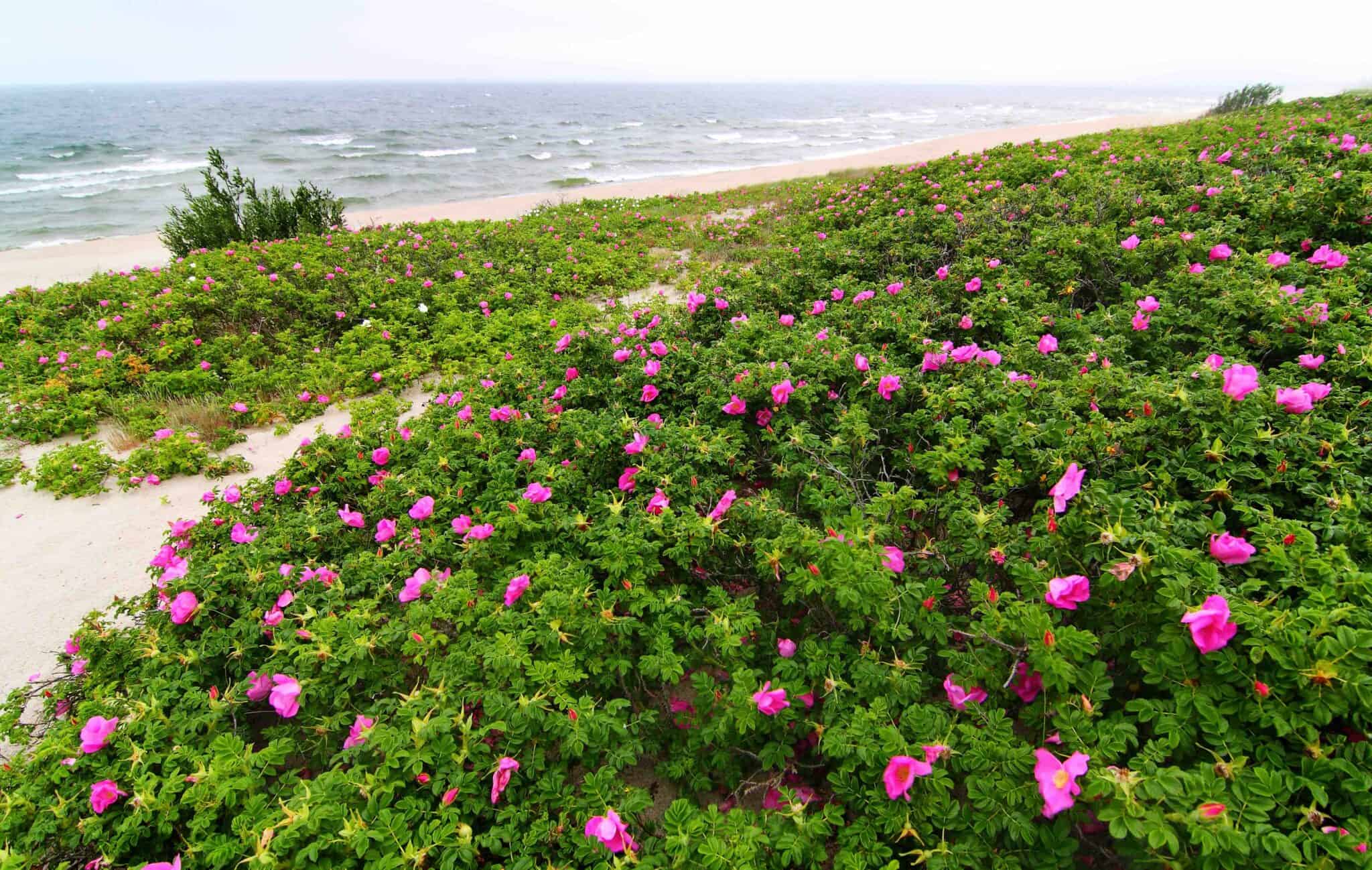
Salt spray leaves a quieter mark but no less destructive. Borne on ocean breezes or left behind by storms, it settles on leaves and soil, drawing out moisture and causing browning or defoliation. Strategic shielding—either with evergreen screens or thoughtfully placed fencing—can minimize its reach. Even better is choosing plants that don’t flinch at salt. Rugosa roses flourish with leathery foliage and heavily scented blooms. Bayberry and juniper bring resilience and texture. Agave and Leyland cypress add bold structure. These plants do more than tolerate tough conditions—they define coastal gardens with grace and permanence.
Sandy soil, while excellent for drainage and early warming in spring, poses its own hurdles. It lacks the organic matter and water retention needed for sustained plant health. Without intervention, even native species can struggle. The remedy is time-tested: enrich the soil with compost, mulch generously, and water deeply and deliberately. Drip irrigation systems are ideal—they conserve water, hydrate roots, and help flush excess salt. Over time, these efforts transform thin, dry soil into something more forgiving and fertile.
Sunlight by the sea is also unique—brighter, sharper, and more intense due to reflection off both water and sand. Surfaces in open gardens can heat to levels that stress even full-sun species. Mulch, once again, becomes a multi-tasking tool, insulating soil while reducing evaporation. Design elements like pergolas, shade sails, or strategically placed trees help diffuse light and lower temperatures, making gardens more livable—for both plants and people.
Despite these challenges, coastal gardening offers a rare kind of beauty. With the right choices, the elements that complicate planting also elevate it. A stone path softened by swaying grasses. Blooms that glow against a backdrop of weathered fencing. Beds that shift with the wind, shimmer in the light, and root themselves confidently in the sand.
The key is intention. Thoughtful plant selection, soil preparation, and protective architecture turn adversity into aesthetic. A well-designed coastal garden doesn’t fight its setting—it becomes an expression of it. Here on the East End, our landscapes can be as resilient and refined as the communities they surround.
Gardening by the shore requires patience, observation, and flexibility—but the payoff is profound. When a garden leans into its environment instead of away from it, it doesn’t just survive. It flourishes—season after season, salt or shine.