Long Island’s History of Ecological Art and Care
Whether a long time resident or mere visitor to the East End, the land, beaches, oceans and waterways have been an irresistible draw. Another of its natural resources, local artists, has also been a cultural lure. The Parrish Art Museum has launched Regeneration: Long Island’s History of Ecological Art and Care as part of its series PARRISH USA250: Life, Liberty, and the Pursuit of Happiness. On view until June 14, the exhibit showcases numerous artists’ work which emerge at the intersection of ecological art, environmental action, and community collaboration. It is both literally and figuratively an exploration of the changing landscape.
Scout Hutchinson, the FLAG Art Foundation Associate Curator of Contemporary Art at the Parrish who co-curated the exhibit with Corinne Erni, the Lewis B. and Dorothy Cullman Chief Curator of Art and Education takes personal pride in bringing together these artists and works to start a conversation. “We felt it was important for the focus to be local, and there are so many artists here and in New York concerned with ecological issues. There is a strong emphasis on community engagement and activism as well.” One example is North Fork artist Cindy Pease Roe who incorporates discarded materials on the beach into her work and also has a not-for-profit UpSculpt focusing on ocean pollution and plastics. Scott Bluedorn also uses fiberglass remnants from boating in his work which explores the shifting ecology and history of East Hampton’s Bonac fishing, farming and hunting practices.
The exhibition also focuses on intergenerational artists. Often it is the younger generation who realize they will inherit the earth and the results of climate change. Sasha Fishman creates sculptures and installations informed by her research into marine biomaterials, toxicology, and natural alternatives to plastic, even focusing on a sustainable alternative to resin, a widely used preservative in art. Fishman’s work will be exhibited next to renowned artist Maya Lin, an exciting opportunity for an emerging artist to have her work in conversation with an international icon. Lin’s recycled silver sculptures of different local bodies of water were made in 2014 for a Parrish solo show, and can be compared to the changing shape of them today.
Hutchinson says, “We are shining a light on a problem but it is a way for audiences to be engaged without feeling overwhelmed. Sometimes a small effort can be the start of something broader.” A focal point is a newly commissioned work by artist Sara Siestreem made in collaboration with the Shinnecock Kelp Farmers, an intergenerational collective of Indigenous women who harness the ancestral tradition of seaweed harvesting to address nitrogen pollution in the waters. While it may seem at times abstract all you have to do is look at the collective despair over the decimation of the local Peconic Bay scallops.
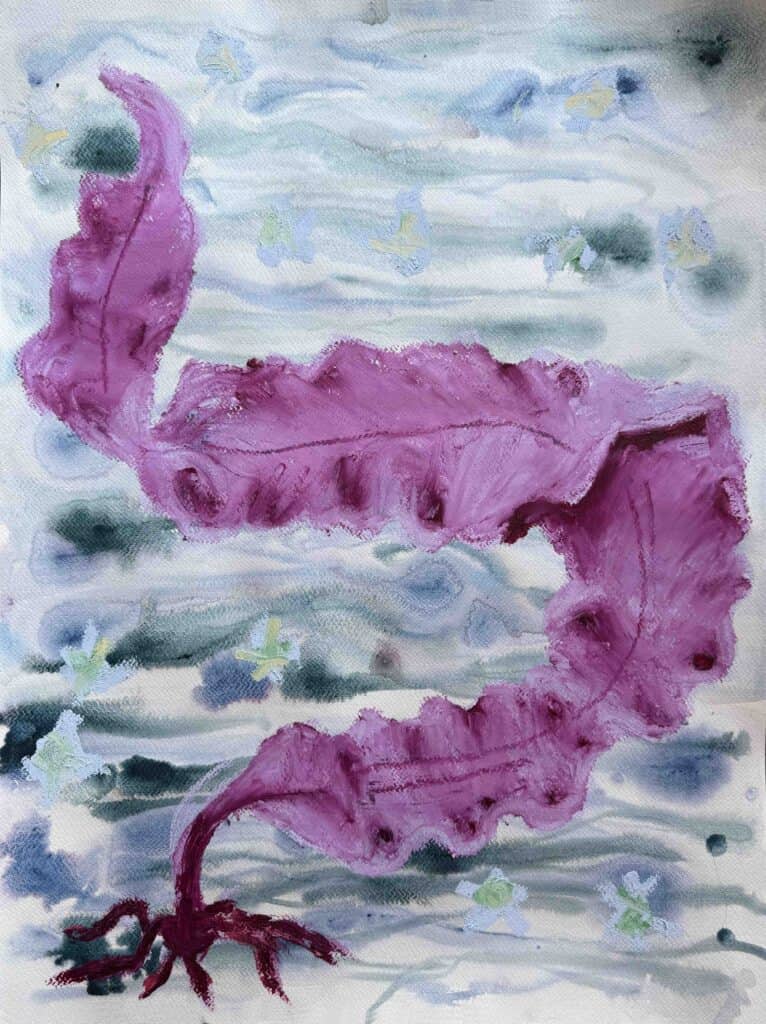
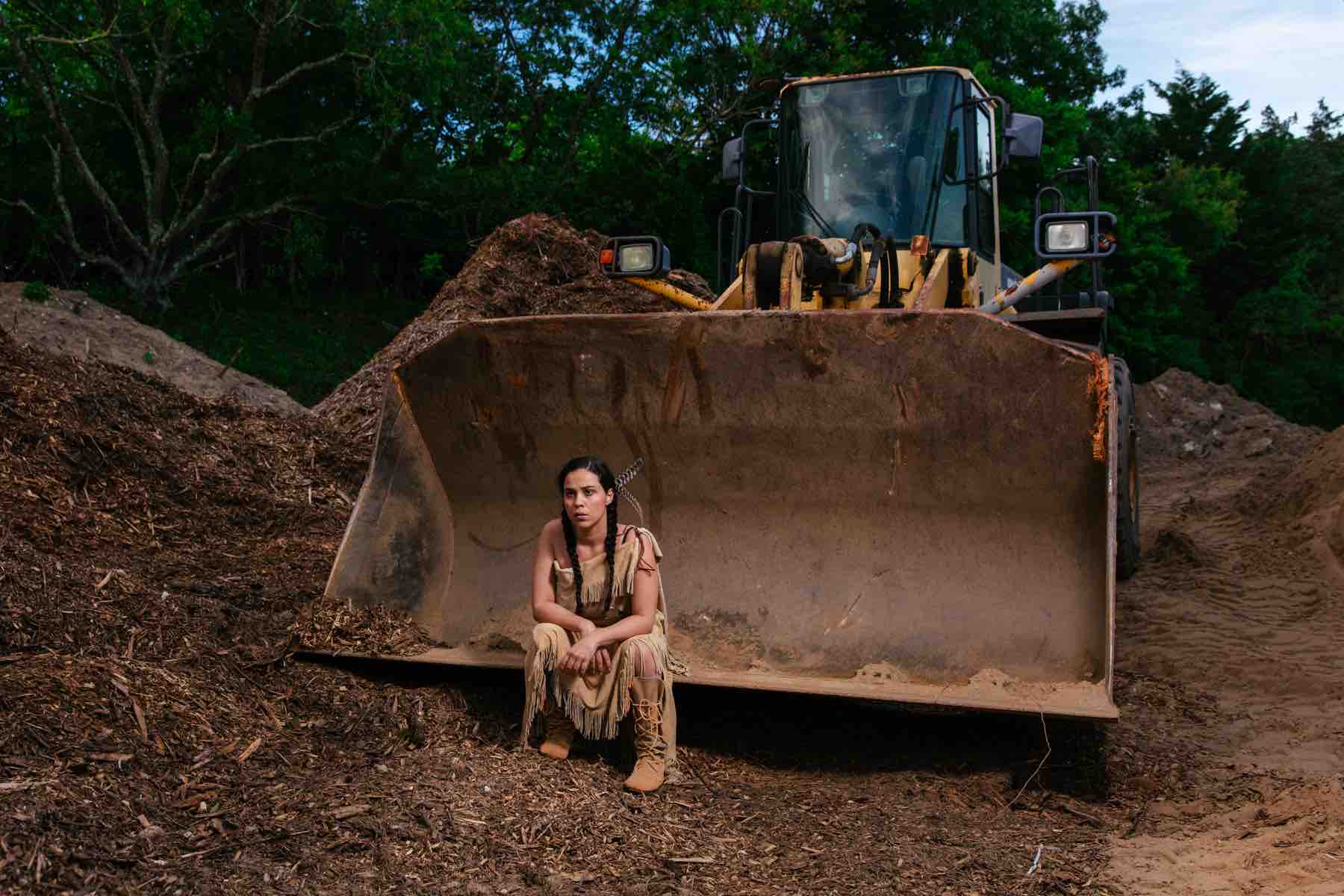
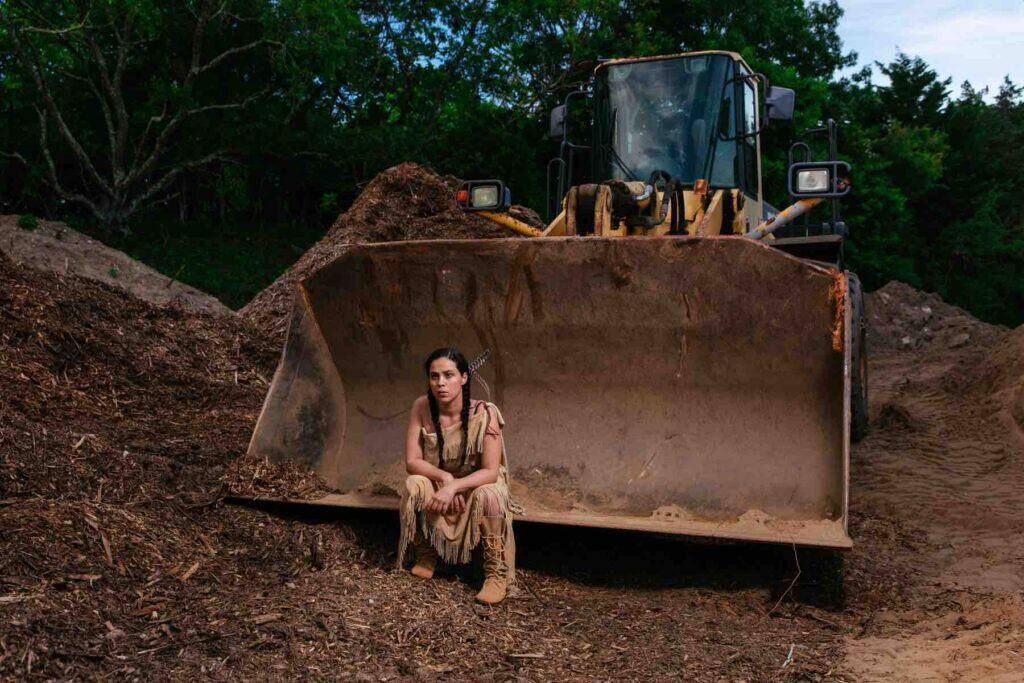
Photographs from Jeremy Dennis use both humor and gravitas in his “Sacredness of Hills” series to highlight the impact of land development and residential construction on Shinnecock sacred sites. The exhibits scale ranges from smaller “Seed Calendar” drawings from Michelle Stuart to large biomorphic sculptures from Mamoun Nukumanu.
One of the side benefits is the artists coming to know one another. Hutchinson, through research, studio visits and word of mouth has put together a group with a common purpose, and the stroll through the galleries feels like a coherent journey even with many different materials and processes. It refocuses our attention on what is important and what we do not want to lose. And rather than be another cog in a wheel of current despair, it highlights ways to be involved and activate. A way, in a changing landscape, to preserve what is near and dear to the East End and beyond.